Top Applications of Computer Vision Across Industries: How AI Is Transforming Modern Businesses
Introduction
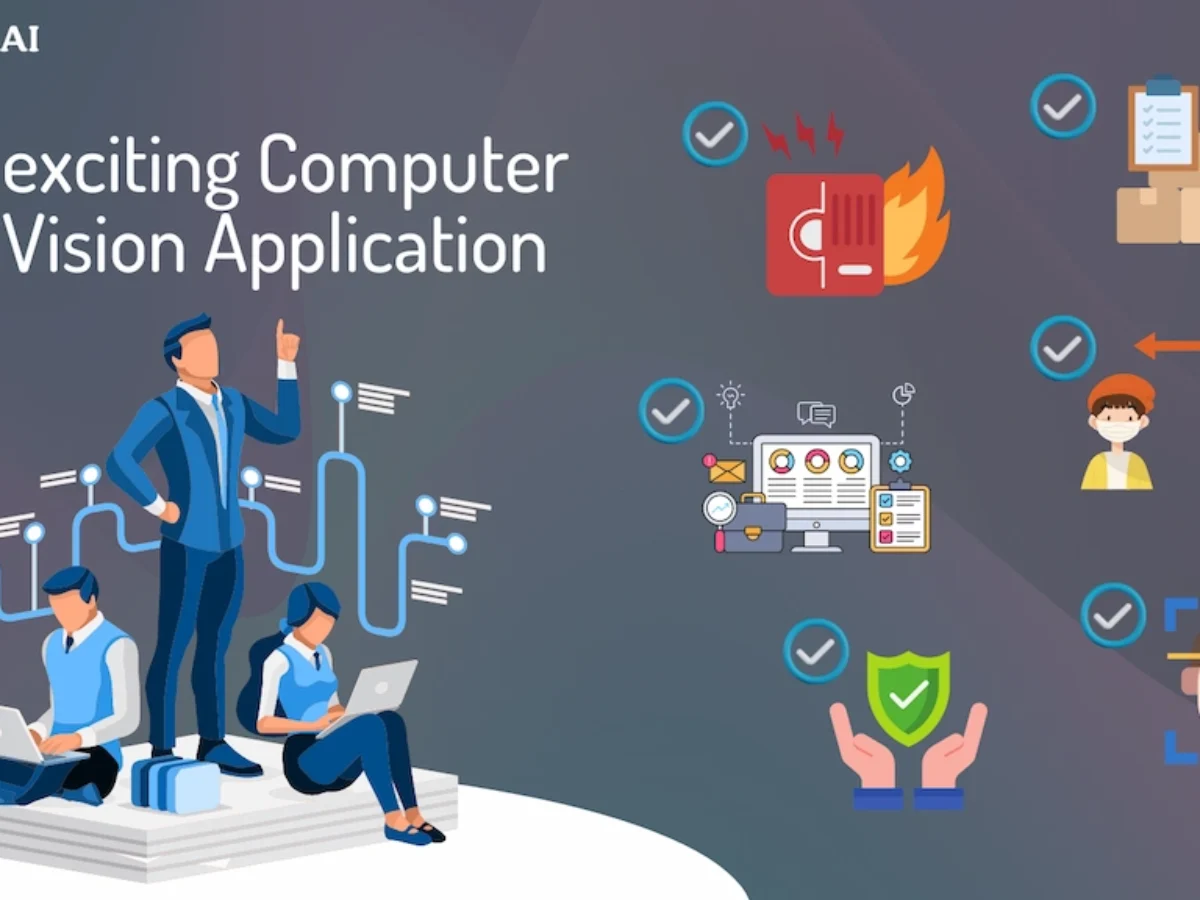
Artificial intelligence (AI) has come a long way since its inception, moving from mere fiction to an essential part of business process. One of the most promising areas of artificial intelligence development is Computer Vision, the ability for computers to understand and process visual data.
Whether it is healthcare, manufacturing, retail, agriculture, transportation, finance, smart cities – companies are leveraging computer vision to solve various problems that used to be resolved manually. Whether it is the detection of product defects or diseases, traffic monitoring, improving customer experience, or something else, AI-powered vision systems help to streamline operations and drive digital transformation.
As per research studies conducted in the industry, computer vision market will enjoy remarkable growth in the coming decade due to rising investments in automation, smart analytics, and technologies of Industry 4.0. Businesses that are implementing computer vision technology now will have more chances to become more productive and cost-effective in future.
This article provides an overview of the most popular applications of computer vision in industries, explains the principles of working of the technology, analyzes the benefits of the solution as well as the difficulties of implementation.
What Is Computer Vision?
Computer Vision is a field of Artificial Intelligence (AI) that enables computers to interpret, process, and understand images and videos.
Using technologies such as:
- Artificial Intelligence (AI)
- Machine Learning (ML)
- Deep Learning
- Image Recognition
- Object Detection
- Image Segmentation
- Optical Character Recognition (OCR)
computer vision systems can recognize objects, detect patterns, identify anomalies, and automate visual inspection tasks with high accuracy.
Unlike traditional image processing, modern computer vision systems continuously improve by learning from large datasets, making them more intelligent over time.
How Computer Vision Works
Most computer vision systems follow four key stages.
Step 1: Image Acquisition
Images and videos are captured using:
- Cameras
- Drones
- Smartphones
- IoT devices
- Industrial sensors
Step 2: Image Processing
The system enhances image quality and extracts useful visual features.
Step 3: AI-Based Analysis
Machine learning models identify:
- Objects
- People
- Vehicles
- Products
- Defects
- Faces (where legally permitted)
- Text
- Patterns
Step 4: Automated Decision-Making
Based on the analysis, the system can:
- Generate alerts
- Classify objects
- Trigger automation
- Produce reports
- Support business decisions
Top Applications of Computer Vision Across Industries
1. Healthcare
Healthcare organizations use computer vision to improve patient care and diagnostic accuracy.
Applications include:
- Medical image analysis
- Disease detection
- Tumor identification
- Patient monitoring
- Surgical assistance
- Hospital workflow automation
Practical Example
AI analyzes MRI or X-ray images to help clinicians identify abnormalities earlier, supporting faster and more informed medical decisions.
2. Manufacturing
Computer vision has become an essential part of smart manufacturing.
Common applications include:
- Product quality inspection
- Defect detection
- Assembly verification
- Predictive maintenance
- Worker safety monitoring
Manufacturers improve product consistency while reducing production costs.
3. Retail
Retail businesses use computer vision to enhance customer experiences and improve operational efficiency.
Applications include:
- Shelf monitoring
- Customer analytics
- Inventory management
- Self-checkout
- Loss prevention
- Smart stores
AI helps retailers optimize inventory while reducing theft and checkout times.
4. Agriculture
Modern farms use computer vision for precision agriculture.
Applications include:
- Crop monitoring
- Disease detection
- Weed identification
- Yield prediction
- Smart irrigation
- Autonomous farming equipment
Farmers improve productivity while minimizing resource consumption.
5. Transportation and Smart Cities
Computer vision powers intelligent transportation systems.
Applications include:
- Traffic monitoring
- Smart traffic signals
- Accident detection
- Vehicle counting
- Smart parking
- Public transportation analytics
Cities reduce congestion while improving road safety.
6. Banking and Financial Services
Banks use computer vision to strengthen security and automate customer services.
Applications include:
- Identity verification
- Document processing
- ATM monitoring
- Fraud detection
- Customer authentication
- Check processing
These solutions improve both security and customer convenience.
7. Logistics and Warehousing
Computer vision improves warehouse operations through:
- Inventory tracking
- Barcode recognition
- Automated picking
- Shipment verification
- Package inspection
- Warehouse safety monitoring
Businesses increase fulfillment speed while reducing errors.
8. Security and Surveillance
AI-powered surveillance systems analyze video streams in real time.
Applications include:
- Intrusion detection
- Perimeter security
- Crowd monitoring
- Workplace safety
- Suspicious activity detection
- Access control
Security teams receive instant alerts, enabling faster responses.
9. Automotive Industry
Automotive companies use computer vision in:
- Driver assistance systems (ADAS)
- Lane detection
- Collision avoidance
- Autonomous driving
- Vehicle inspection
- Manufacturing automation
Computer vision is a key technology behind self-driving vehicles.
10. Healthcare and Life Sciences
Beyond diagnostics, computer vision supports:
- Laboratory automation
- Pharmaceutical inspection
- Medical robotics
- Patient safety
- Hospital asset tracking
Healthcare providers improve efficiency and care quality.
Computer Vision Applications Comparison
| Industry | Primary Application | Business Benefit |
|---|---|---|
| Healthcare | Medical image analysis | Faster diagnosis |
| Manufacturing | Quality inspection | Reduced defects |
| Retail | Inventory monitoring | Improved customer experience |
| Agriculture | Crop monitoring | Higher yields |
| Transportation | Traffic management | Reduced congestion |
| Banking | Fraud detection | Enhanced security |
| Logistics | Warehouse automation | Faster order fulfillment |
| Security | Intelligent surveillance | Real-time threat detection |
| Automotive | Autonomous driving | Improved road safety |
| Pharmaceuticals | Product inspection | Regulatory compliance |
Benefits of Computer Vision Across Industries
Increased Operational Efficiency
Automation reduces repetitive manual tasks and accelerates business processes.
Higher Accuracy
AI delivers consistent visual analysis with fewer errors than manual inspection.
Reduced Costs
Automation lowers labor costs, minimizes waste, and improves resource utilization.
Better Customer Experience
Businesses deliver faster, more personalized, and higher-quality services.
Real-Time Decision Making
Organizations receive immediate insights that support faster responses.
Improved Workplace Safety
Computer vision detects hazardous situations and helps prevent accidents.
Practical Example
A global manufacturing company integrates computer vision across multiple operations.
AI monitors production quality, warehouse inventory, employee safety, and logistics simultaneously.
Results include:
- Lower defect rates
- Faster deliveries
- Reduced operational costs
- Improved customer satisfaction
- Higher production efficiency
This demonstrates how computer vision creates value beyond a single department.
Challenges of Implementing Computer Vision
Despite its advantages, organizations should prepare for several challenges.
Data Quality
AI requires large volumes of high-quality images for accurate training.
Infrastructure Costs
Cameras, AI hardware, cloud platforms, and networking infrastructure require investment.
Integration
Computer vision should integrate with:
- ERP systems
- CRM platforms
- IoT devices
- Enterprise software
- Automation systems
Privacy and Compliance
Organizations should implement responsible data governance, secure storage, and comply with applicable privacy regulations when processing visual data.
Continuous AI Improvement
AI models require regular updates to maintain accuracy as environments and business needs evolve.
Best Practices
To achieve successful implementation:
- Start with high-impact business problems.
- Collect diverse, high-quality image datasets.
- Use scalable AI infrastructure.
- Integrate computer vision with existing workflows.
- Monitor AI performance continuously.
- Strengthen cybersecurity and data protection.
- Train employees on AI-assisted operations.
Common Mistakes to Avoid
Avoid these common pitfalls:
- Implementing AI without measurable objectives.
- Using insufficient or biased datasets.
- Ignoring system integration.
- Expecting immediate ROI.
- Neglecting employee training.
- Failing to maintain AI models over time.
Actionable Tips
If you're planning to adopt computer vision:
- Identify repetitive visual tasks suitable for automation.
- Start with a pilot project.
- Invest in high-quality cameras and AI-ready hardware.
- Measure business KPIs before and after implementation.
- Continuously optimize AI models using new data.
- Partner with experienced AI solution providers.
Organizations looking to build intelligent computer vision applications can leverage Artificial Intelligence & Machine Learning Development Services to develop custom AI solutions for image recognition, object detection, predictive analytics, automation, and industry-specific use cases.
Businesses planning enterprise software, intelligent automation platforms, or digital transformation initiatives can also explore Custom Software Development Services.
Key Takeaways
- Computer Vision enables machines to analyze images and videos using Artificial Intelligence and Machine Learning.
- Industries including healthcare, manufacturing, retail, agriculture, banking, logistics, transportation, and security are adopting computer vision to improve efficiency and automation.
- AI-powered vision systems reduce costs, enhance accuracy, improve customer experiences, and support better decision-making.
- Successful implementation requires quality data, scalable infrastructure, integration, cybersecurity, and continuous AI optimization.
- Computer Vision is becoming one of the most impactful technologies driving digital transformation across industries.
Conclusion
Computer Vision is no longer confined to laboratories and is now generating value for businesses across all industries. The technology allows machines to process visual inputs that lead to automation, enhanced operational efficiency, improved security, optimized processes, and quick data-driven decision making.
From aiding physicians in disease diagnosis, defect detection by manufacturers, inventory management by retailers, crop monitoring by farmers to traffic improvement by cities, computer vision has continued to transform businesses in the evolving digital age.
With continued development in the field of AI technologies, computer vision will continue to evolve to deliver greater automation, innovations, and sustainable growth for businesses investing in this technology today.
Ready to Transform Your Business with Computer Vision?
When you plan to develop automated systems with AI, update your processes, or deploy intelligent computer vision systems, working together with a tech partner will help move forward on your way to digital transformation faster.
Through the right blend of Computer Vision, Artificial Intelligence, and software development, your business can become more efficient and cost-effective.
Frequently Asked Questions (FAQs)
1. What is Computer Vision?
Computer Vision is a branch of Artificial Intelligence that enables computers to analyze and understand images and videos for tasks such as object detection, image recognition, quality inspection, and automated decision-making.
2. Which industries benefit most from Computer Vision?
Healthcare, manufacturing, retail, agriculture, banking, logistics, transportation, automotive, pharmaceuticals, and security are among the leading industries using computer vision to improve efficiency and innovation.
3. How does Computer Vision improve business operations?
Computer Vision automates repetitive visual tasks, reduces errors, improves quality control, enhances customer experiences, increases operational efficiency, and provides real-time insights for better decision-making.
4. What technologies are used in Computer Vision?
Computer Vision combines Artificial Intelligence (AI), Machine Learning (ML), Deep Learning, Image Recognition, Object Detection, Optical Character Recognition (OCR), IoT devices, and cloud or edge computing technologies.
5. Is Computer Vision only useful for large enterprises?
No. Cloud-based AI services and scalable computer vision platforms make this technology accessible for startups, small businesses, and medium-sized enterprises as well.
6. What are the biggest challenges of implementing Computer Vision?
Organizations commonly face challenges related to data quality, infrastructure costs, integration with existing systems, privacy compliance, cybersecurity, and ongoing AI model maintenance.
7. How does Computer Vision differ from image processing?
Traditional image processing applies predefined rules to images, while Computer Vision uses AI and Machine Learning to interpret visual information, learn from data, and improve accuracy over time.
8. What is the future of Computer Vision?
Future developments include Edge AI, autonomous robots, digital twins, advanced healthcare diagnostics, intelligent manufacturing, smart cities, autonomous vehicles, and increasingly sophisticated real-time visual intelligence across industries.